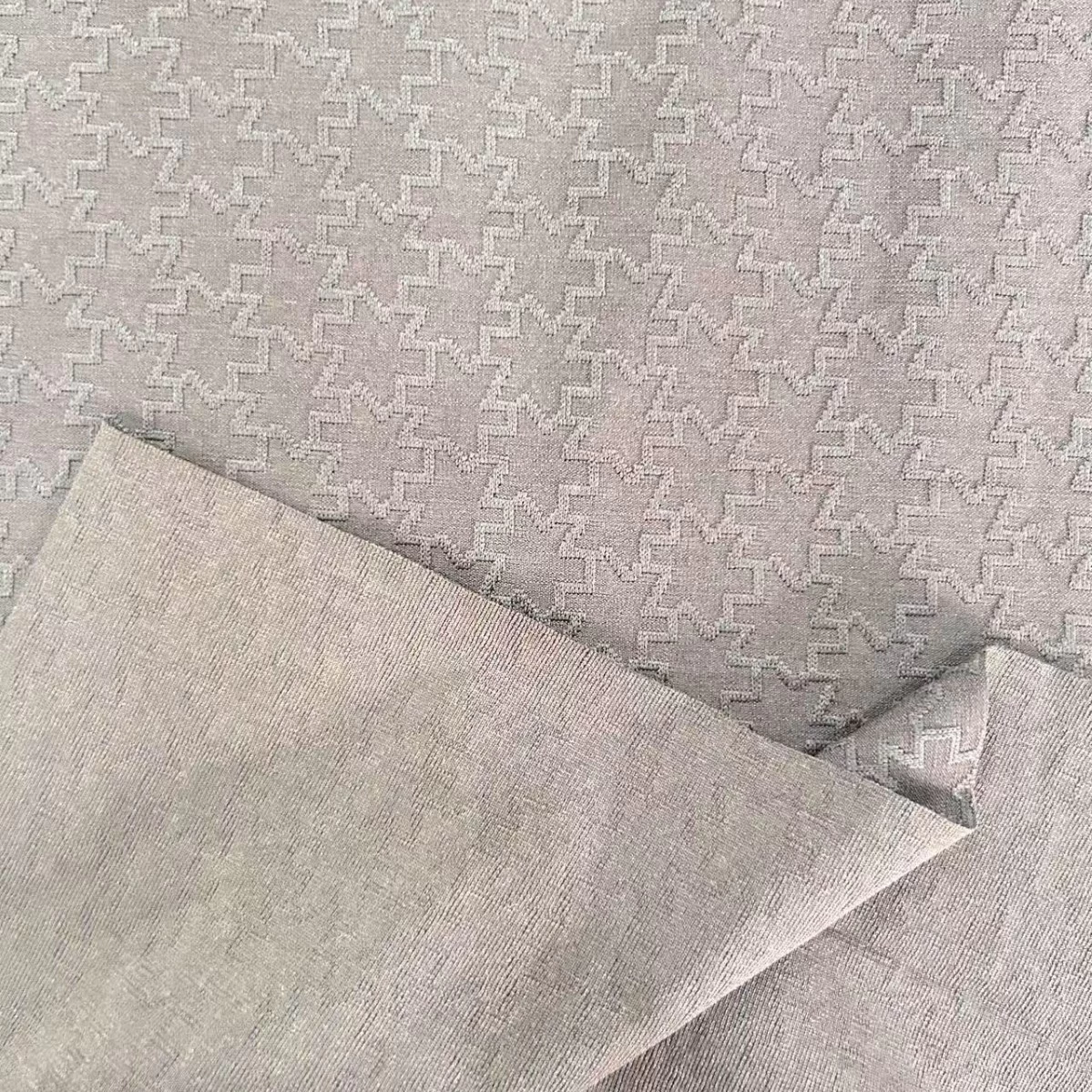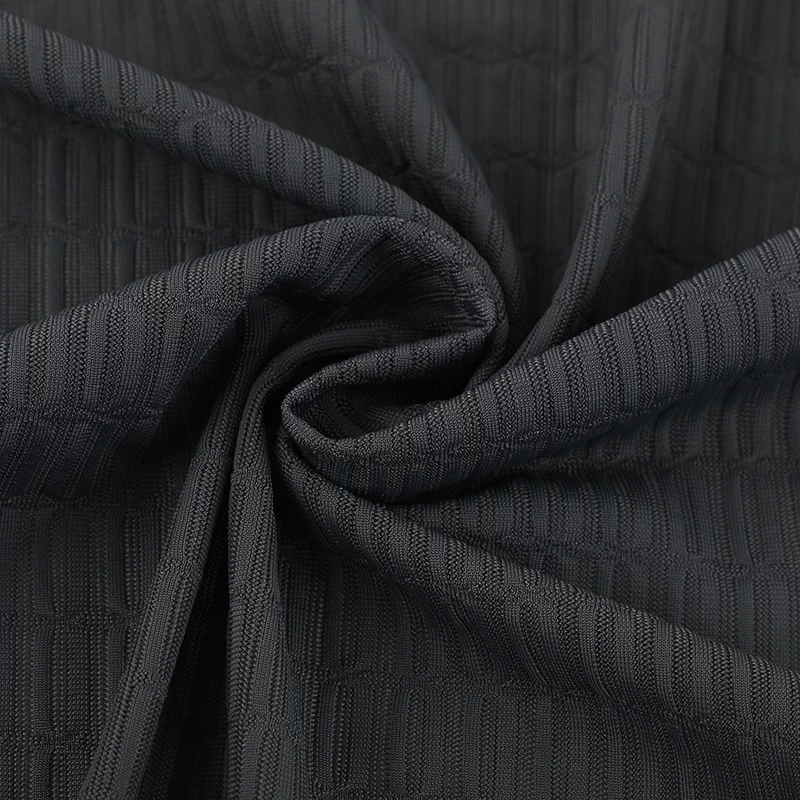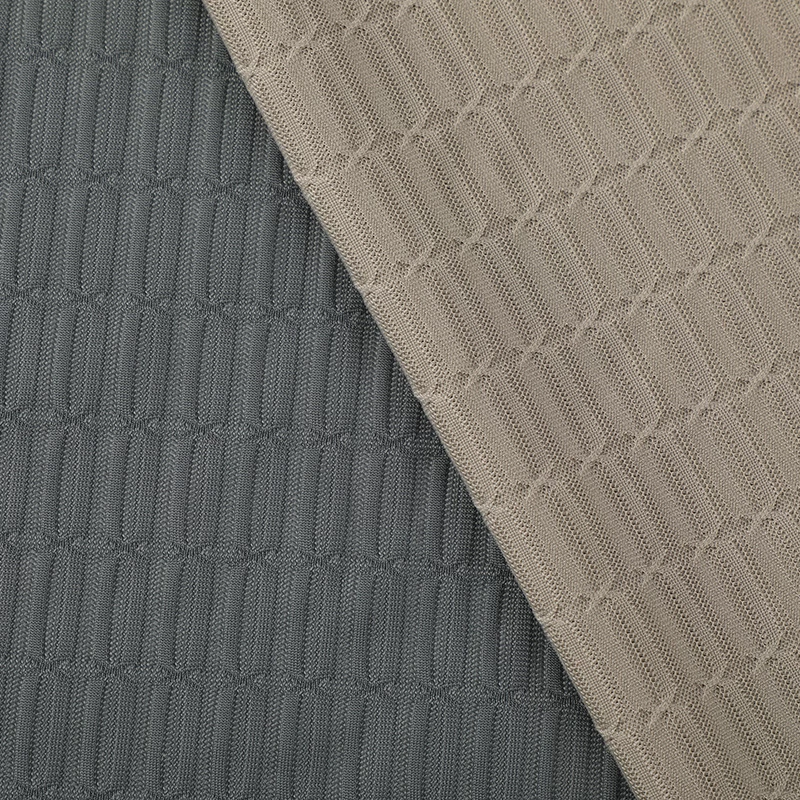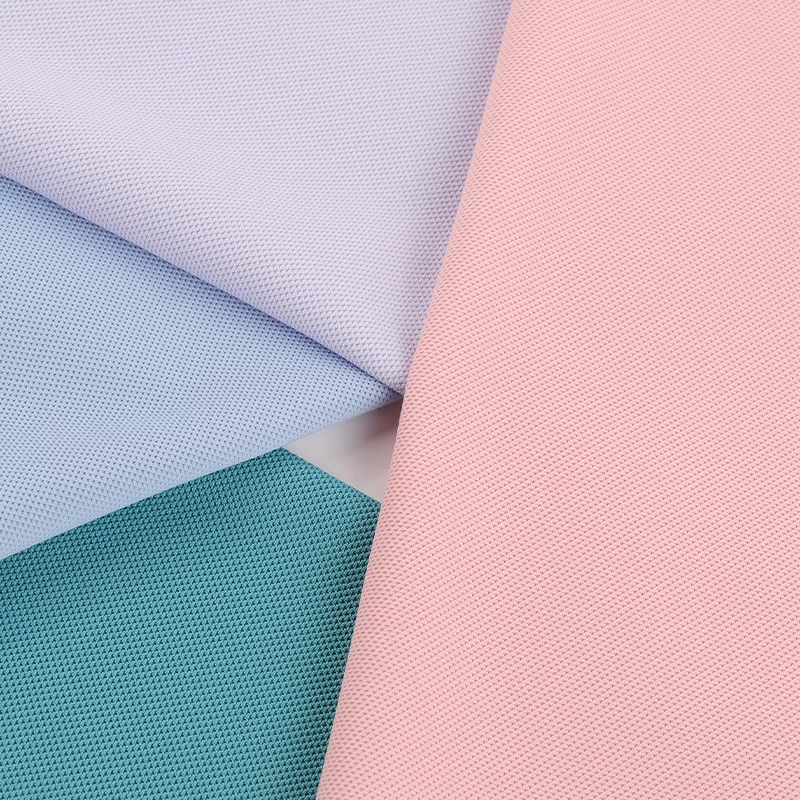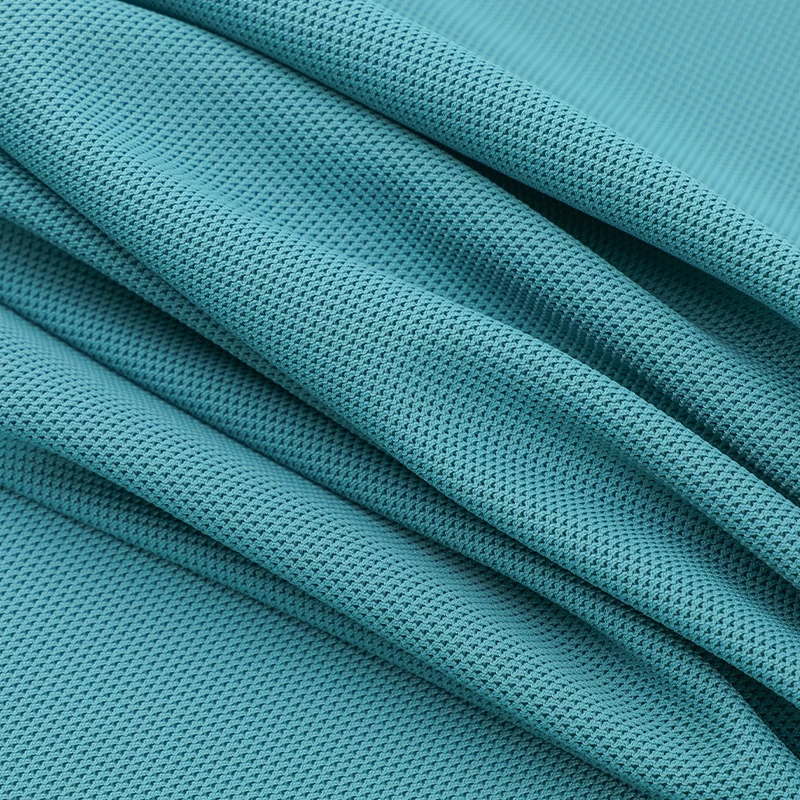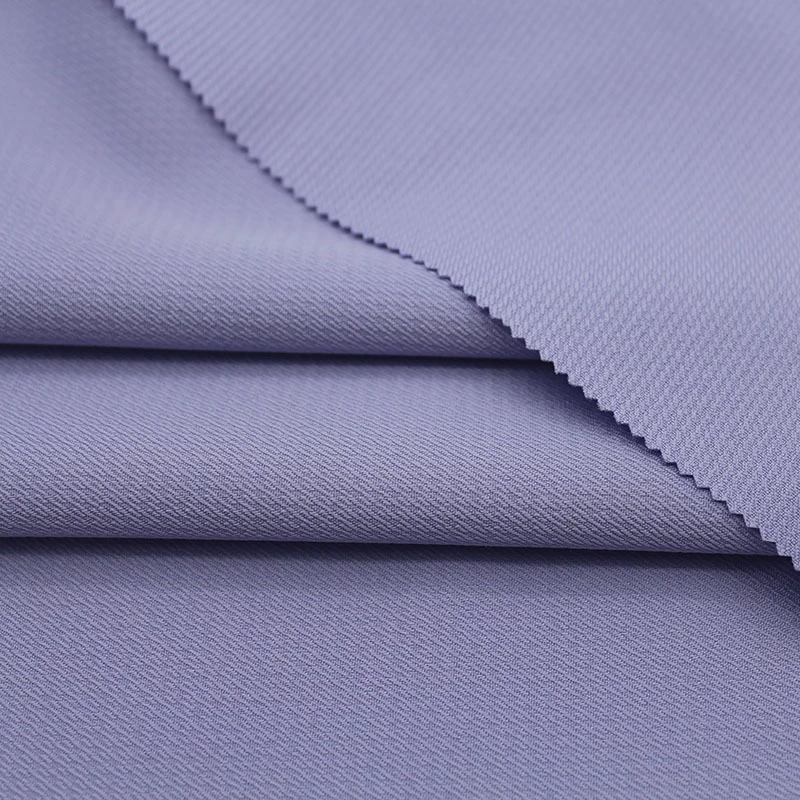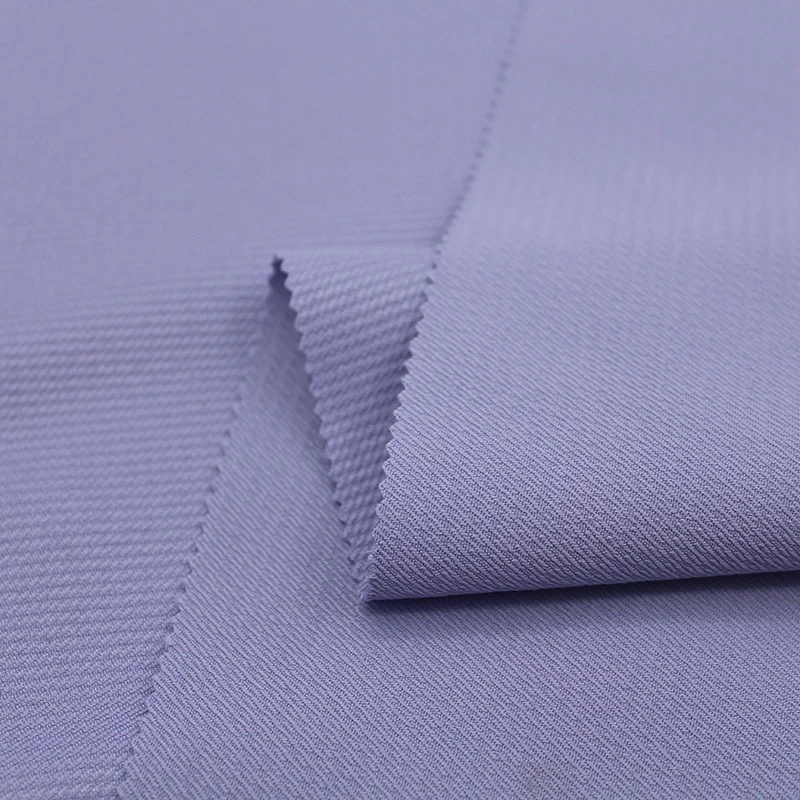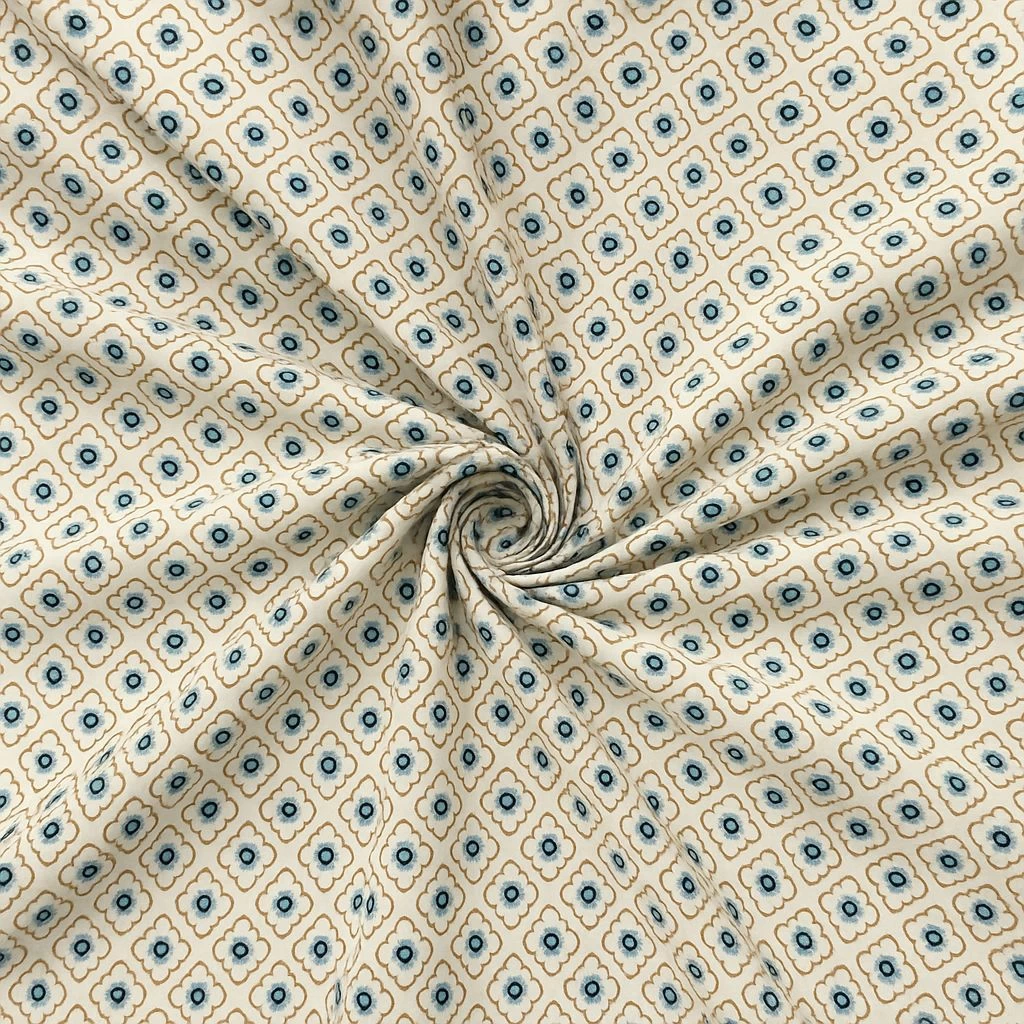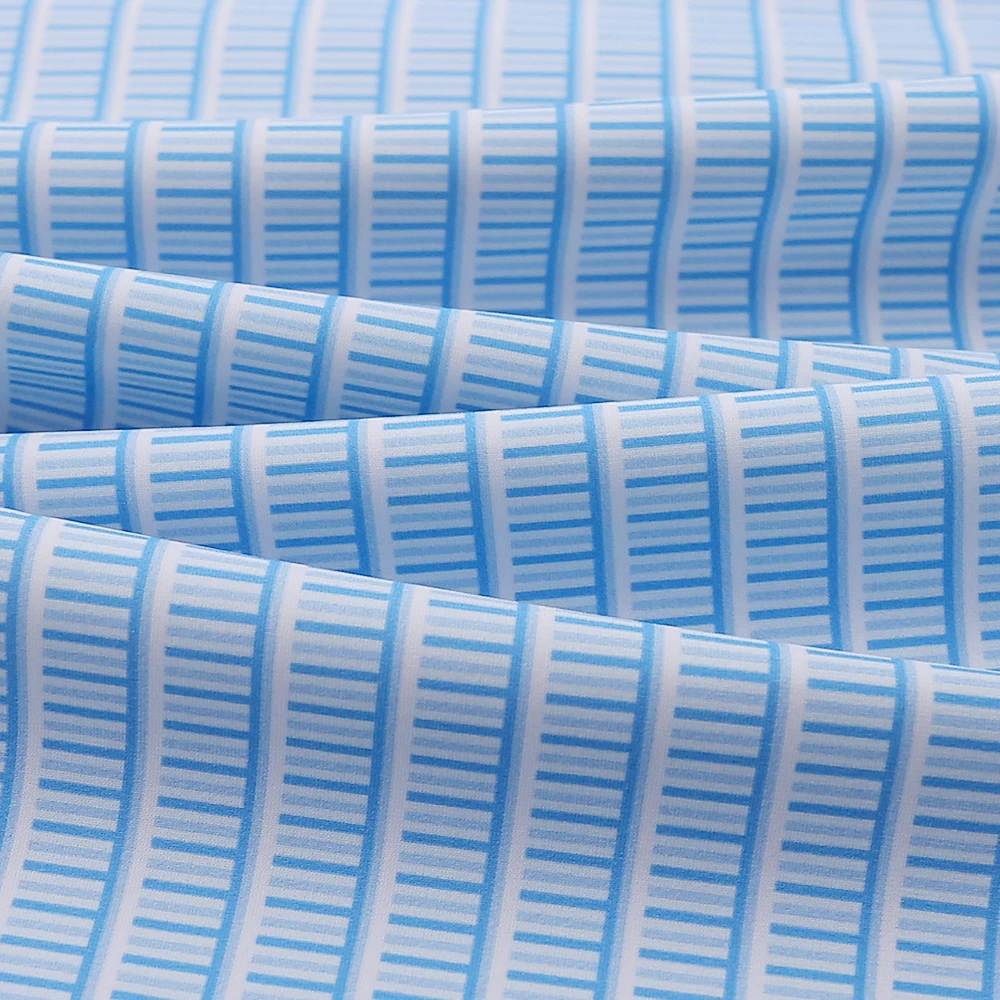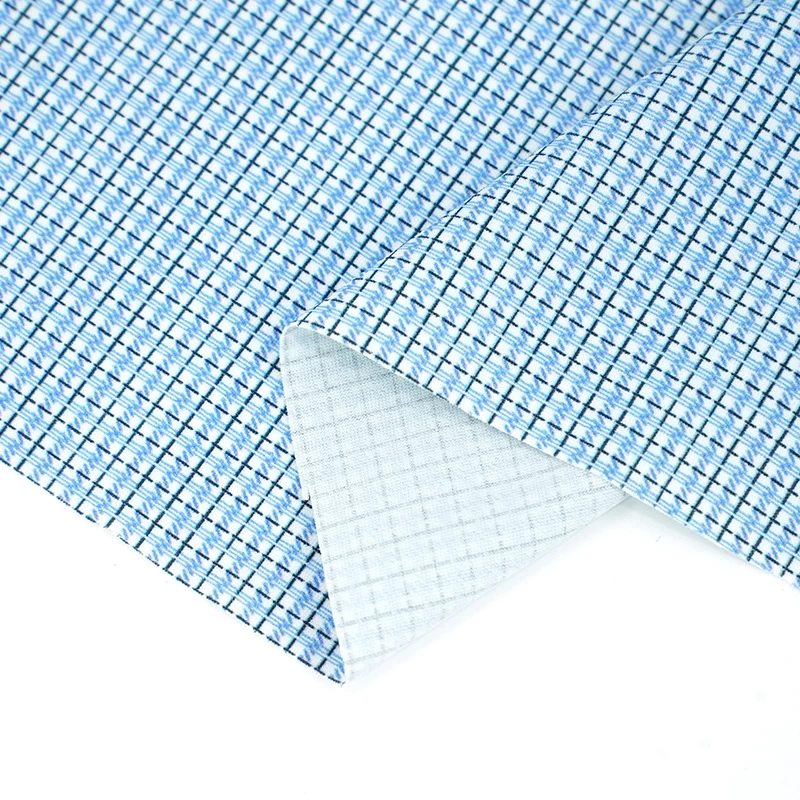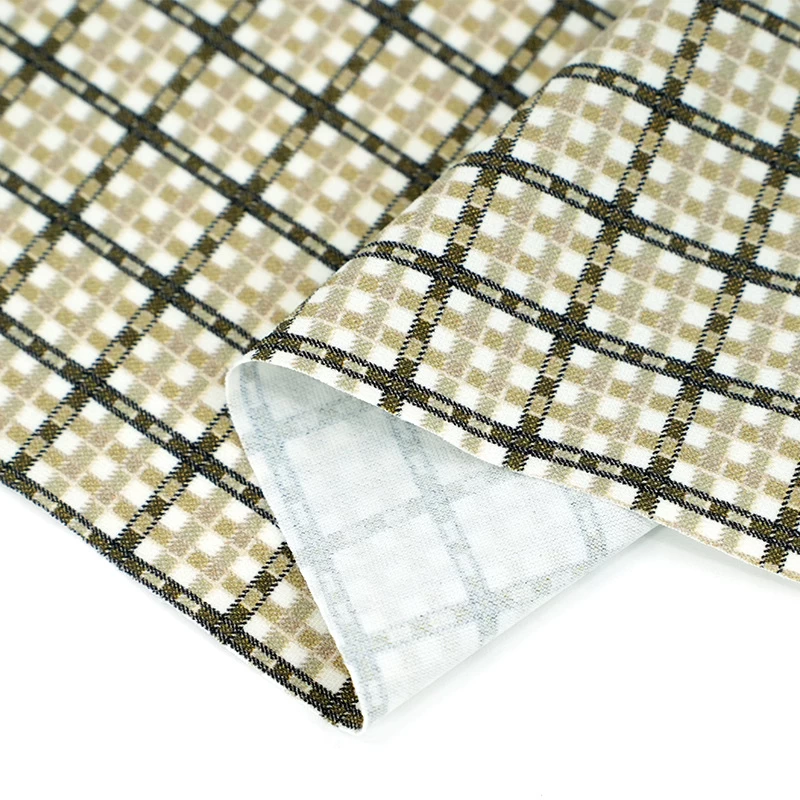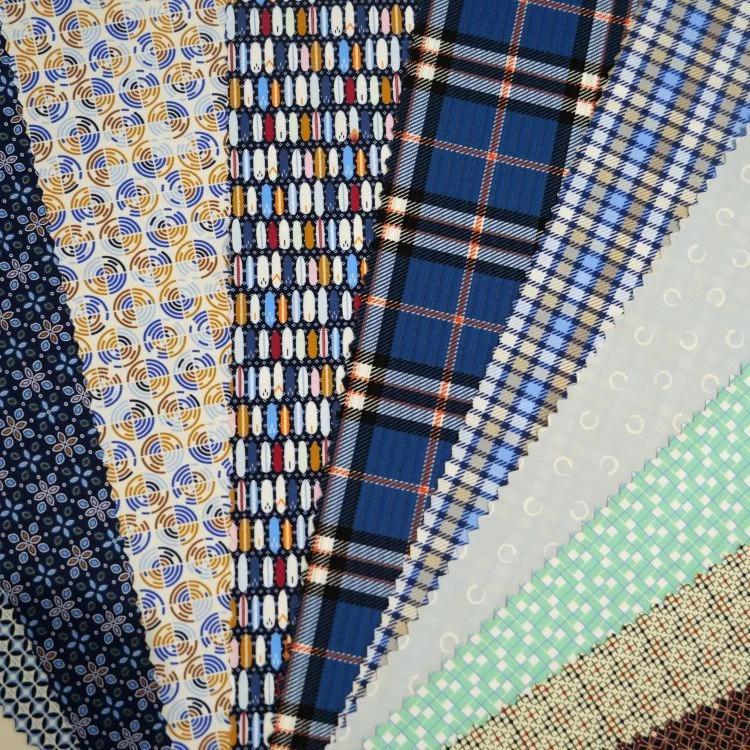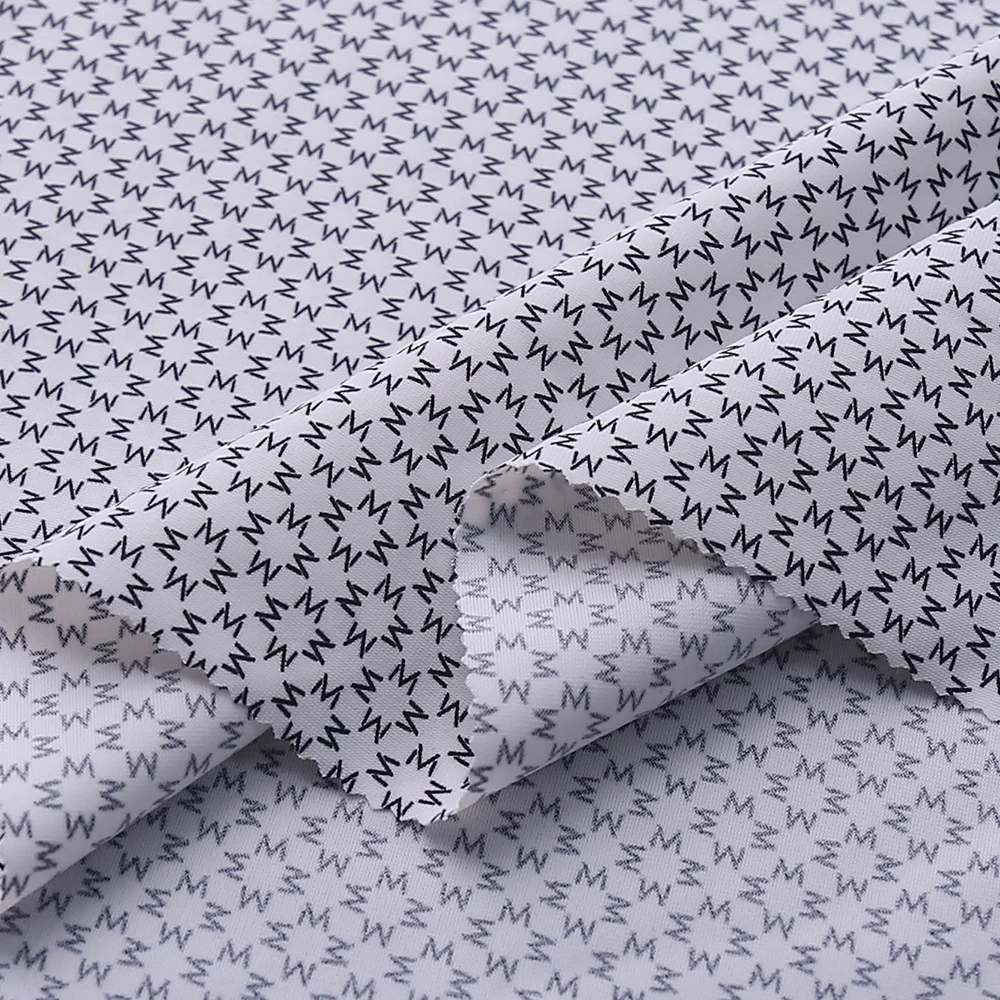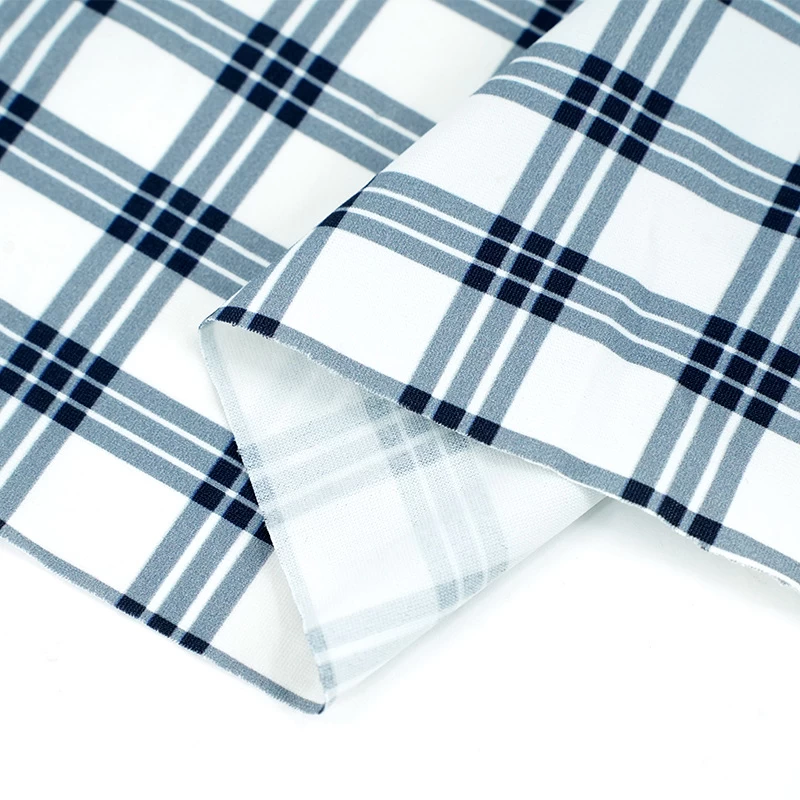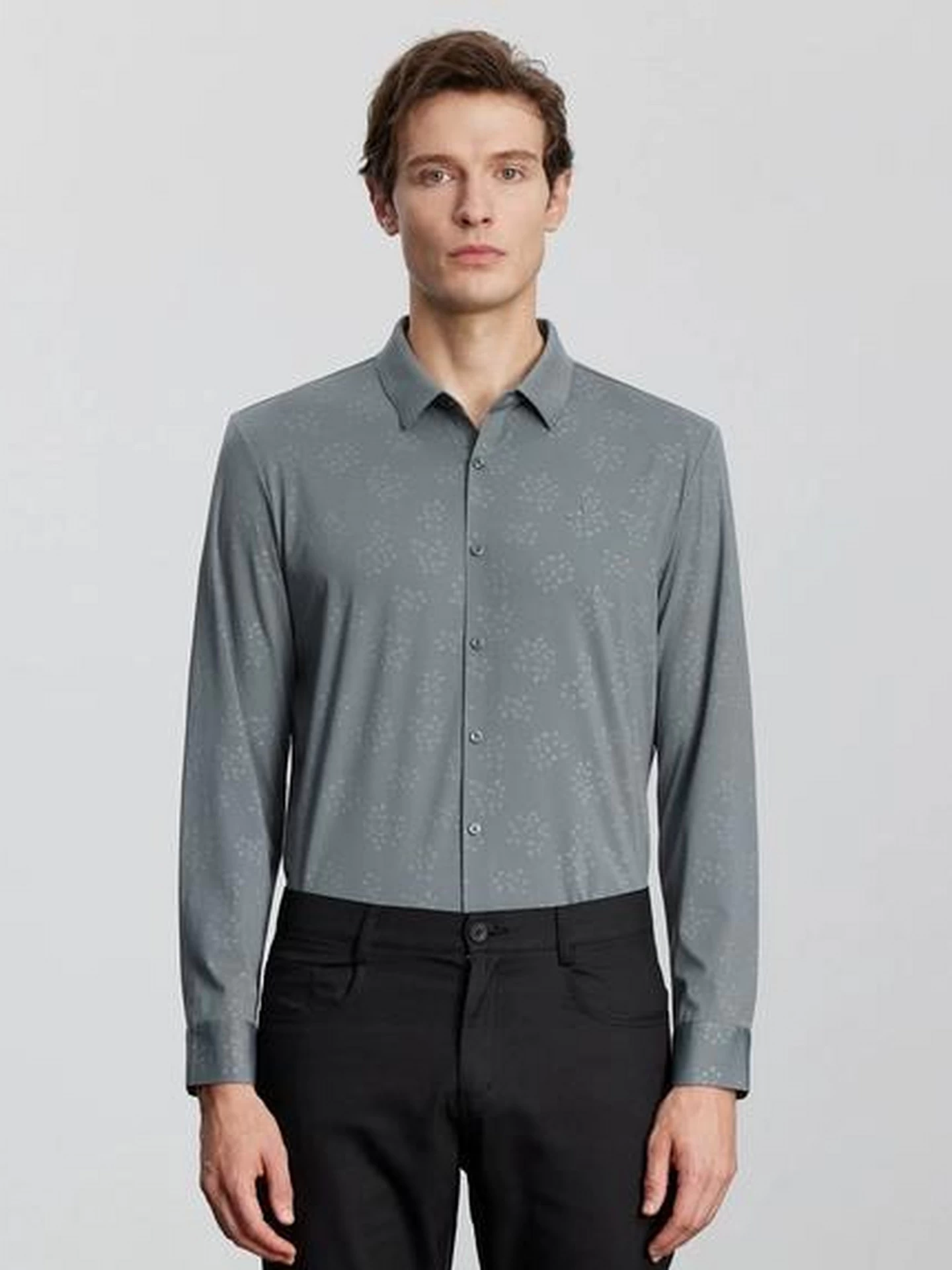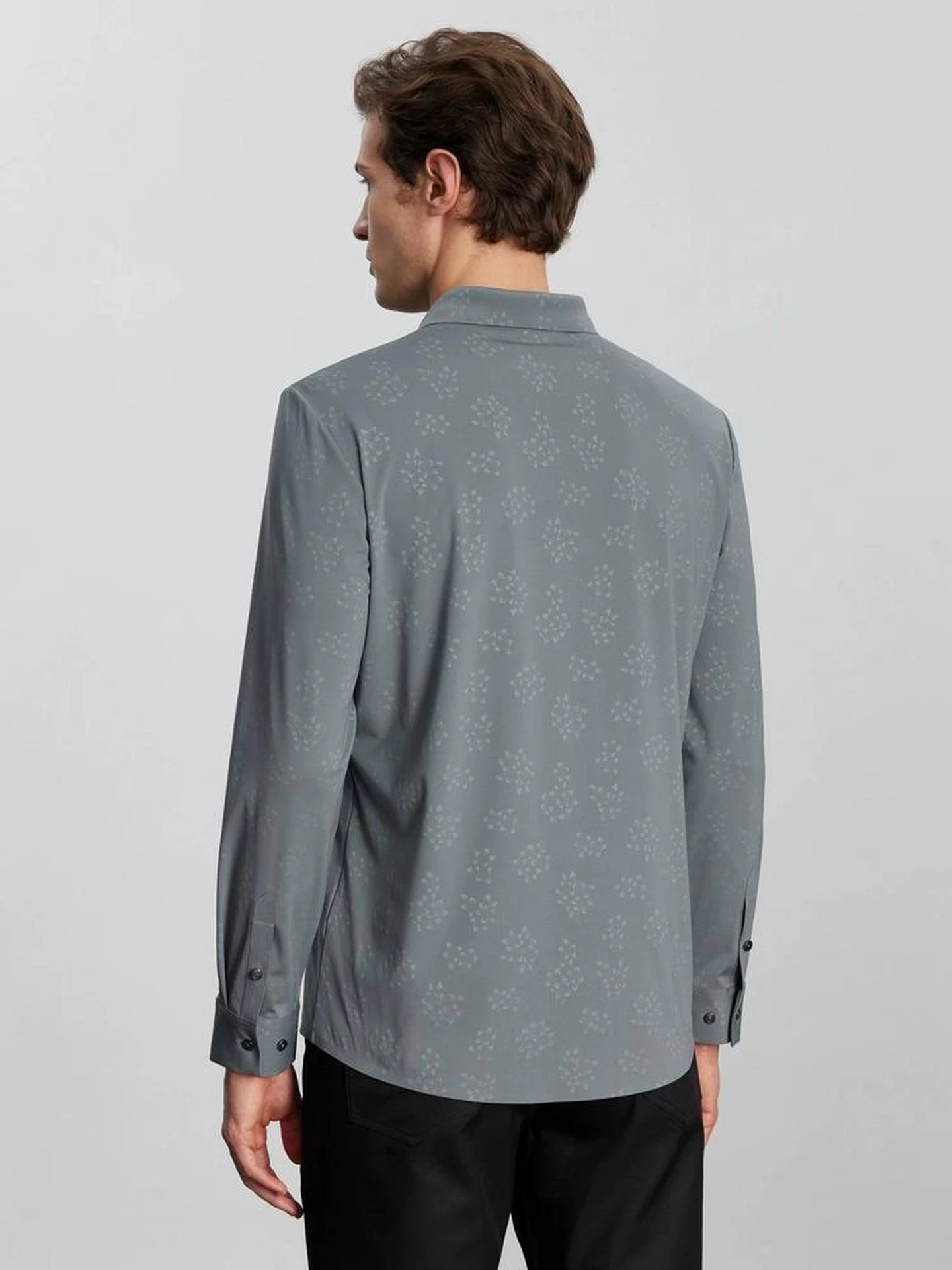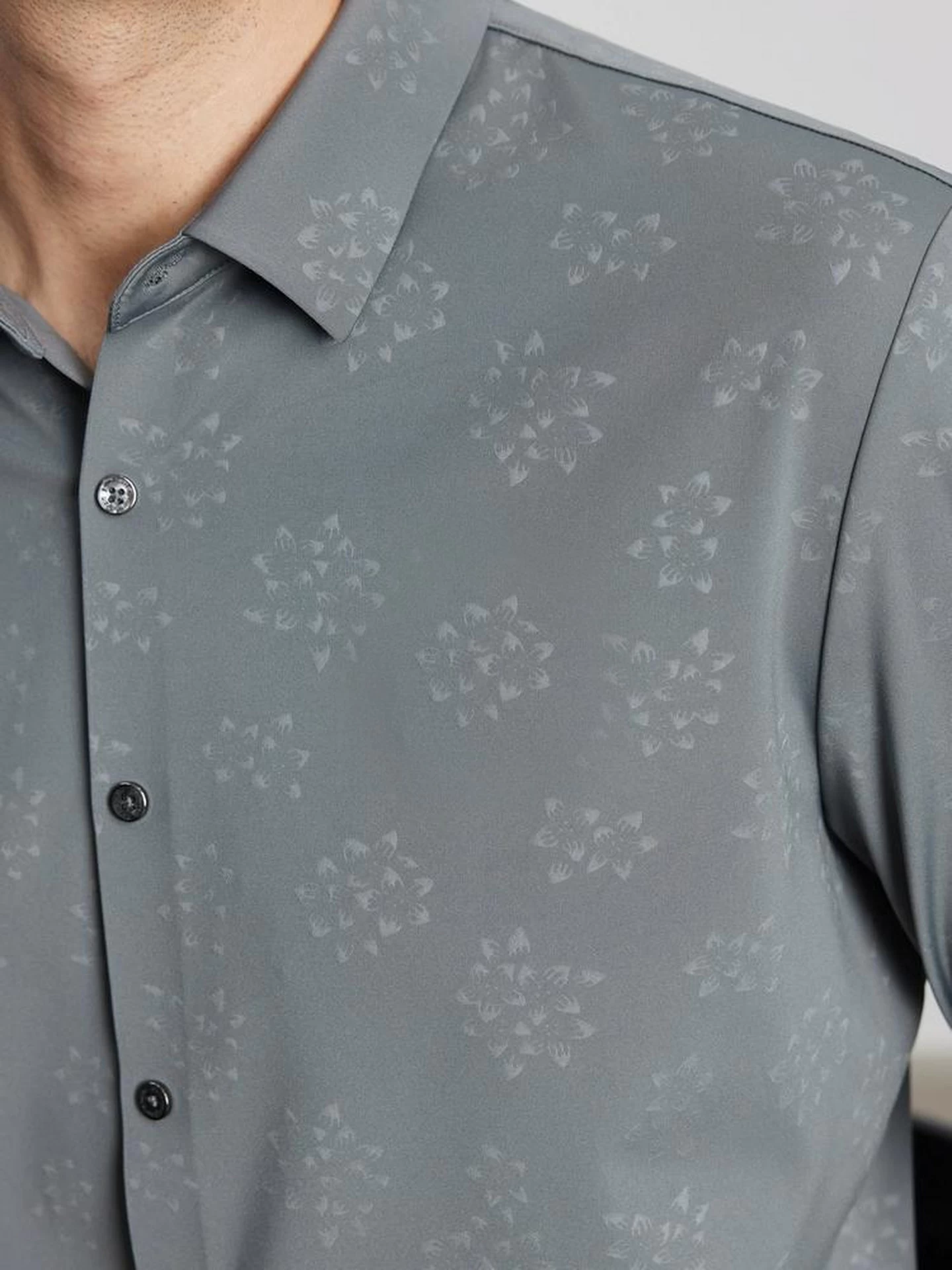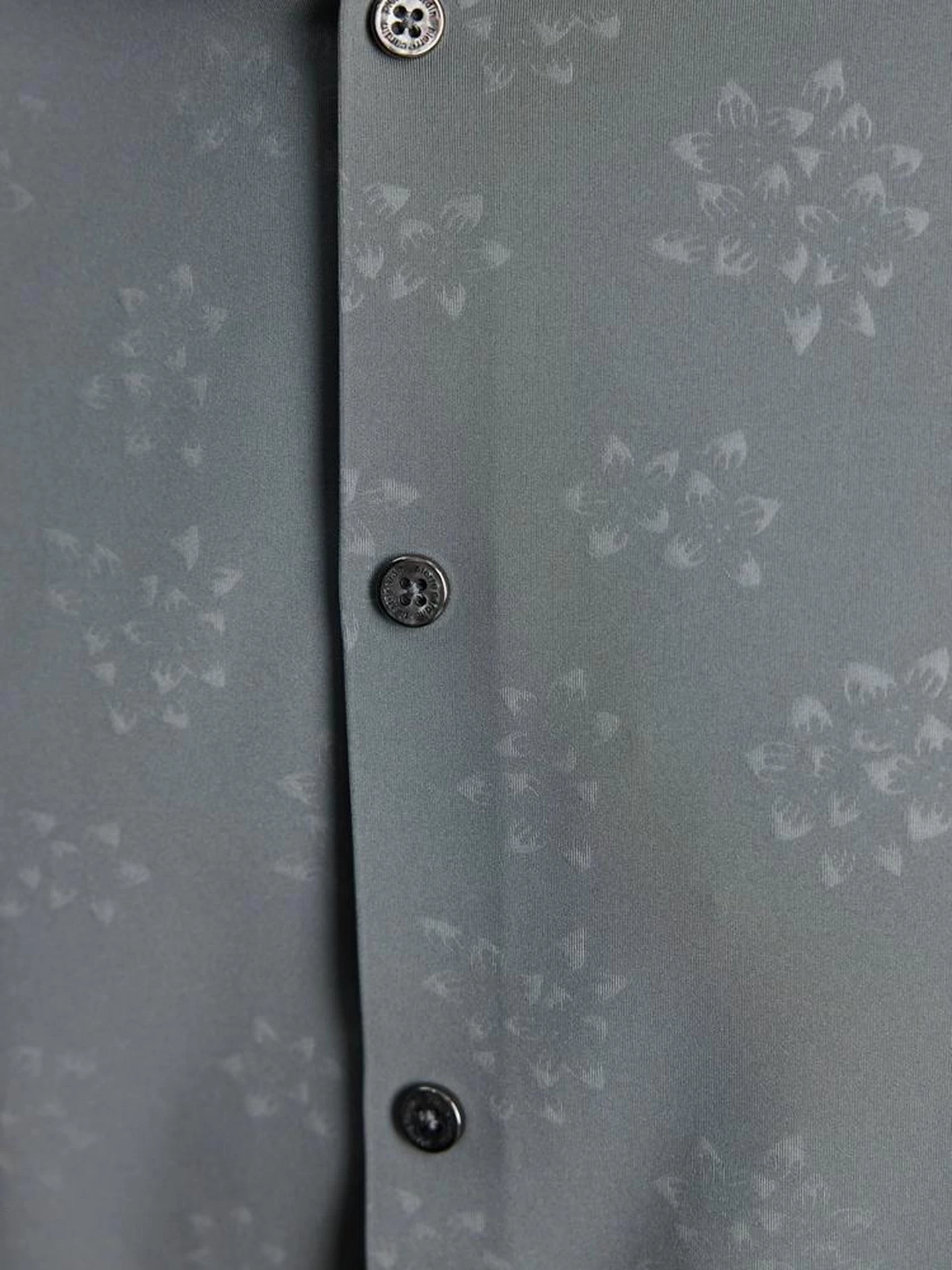
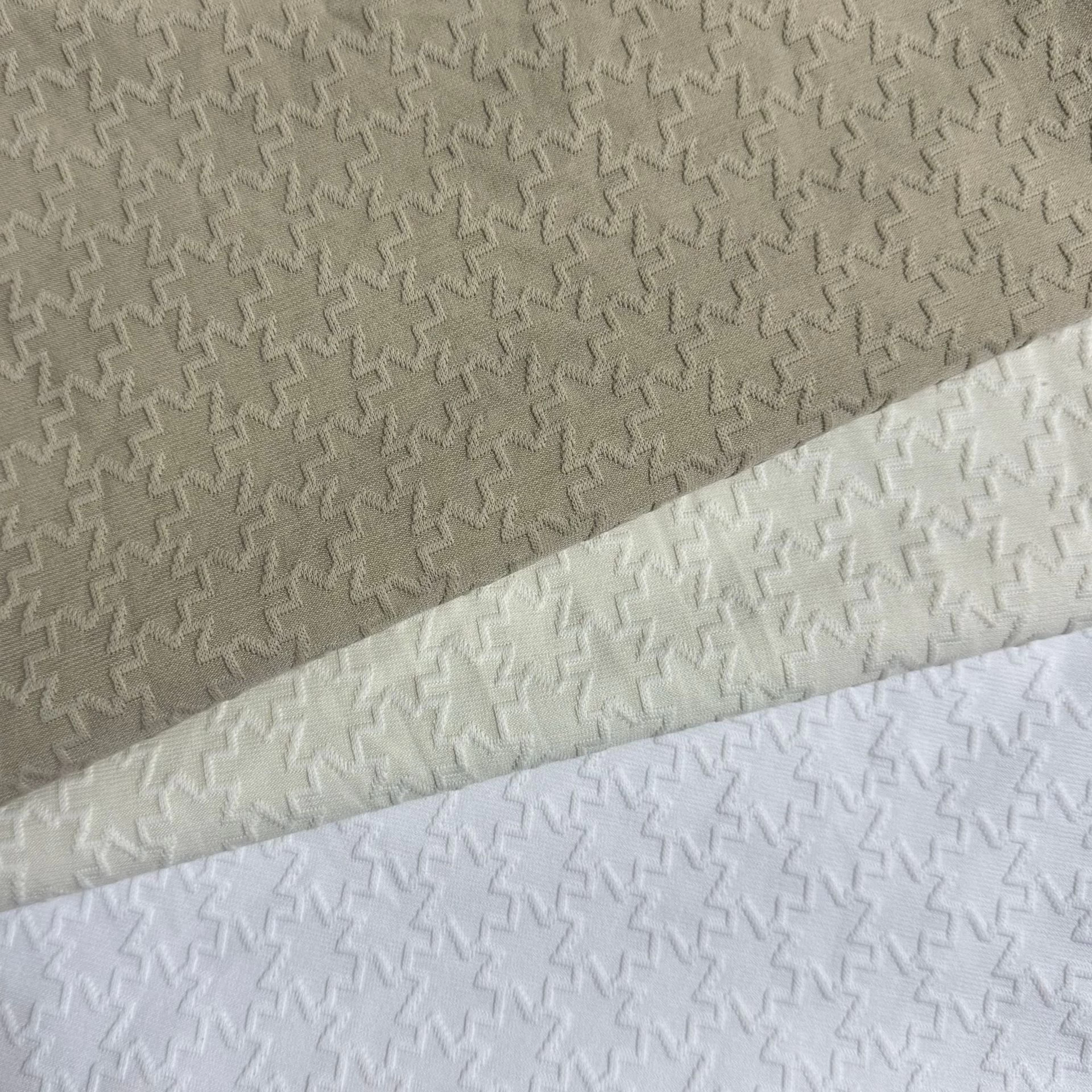
Two patterned knitwear samples can look nearly identical on a hanger and behave completely differently after twenty washes. The difference is whether the pattern is knitted into the fabric or printed onto it. That single decision cascades into cost, minimum order quantity, colour limits and design freedom.
How Each Technique Works
Knitted Jacquard
A jacquard knitting machine controls individual needles, so different yarns can be selected at different positions in the same row. The pattern is created by the yarn itself — a blue yarn and a white yarn alternating across the width to form a design. The pattern is structural, not applied.
The practical consequences follow directly from that mechanic: jacquard requires the machine to be programmed for each design, needs a yarn package for every colour in the pattern, and knits slower than a plain fabric because needle selection is complex.
Knitted Print
Knit fabric is produced in a plain or simple structure, then a pattern is applied to the surface — historically by rotary or screen printing, increasingly by digital printing. The pattern sits on top of the knit rather than forming part of it.
This separates design from manufacturing: the knit structure stays constant, so a single fabric base can carry unlimited designs.
The Trade-Offs That Matter
Durability and Appearance Over Time
Jacquard patterns are permanent. Because the colour comes from the yarn, there is nothing to crack, peel or fade at the surface — the pattern will outlast the garment. Print sits on the fibre surface and is exposed to abrasion and washing. Under repeated laundering, print can fade or crack at high-stretch areas such as shoulders and cuffs.
For garments that must survive industrial laundering or years of daily wear, jacquard is the more reliable choice.
Design Freedom
Print wins decisively on complexity. Photographic imagery, fine gradients, dozens of colours and small text are all straightforward with digital print. Jacquard is limited by yarn colours and stitch resolution: fine detail breaks down, gradients must be simulated with discrete yarns, and each additional colour adds cost and complexity.
Hand-Feel and Stretch
Jacquard fabric carries the pattern's yarns throughout, so the feel is consistent front and back and the fabric retains knit elasticity. Print adds a thin layer to one face of the fabric, which can slightly stiffen the hand-feel at pattern-dense areas and reduce stretch locally, depending on the ink system used.
Minimum Order Quantity and Cost
Jacquard demands machine programming, a yarn package per colour and slower knitting. That pushes minimums higher and makes small runs expensive per unit. Print is far more accessible at low volume, especially digital print, because there is no programming step and no yarn requirement.
Side-by-Side Comparison
| Factor | Knitted Jacquard | Knitted Print |
|---|---|---|
| How the pattern is created | Built into knit structure | Applied to fabric surface |
| Durability | Permanent | Can fade or crack over time |
| Colour complexity | Limited by yarn count in design | Unlimited, incl. gradients |
| Fine detail / text | Poor to fair | Excellent |
| Stretch retention | Full | Reduced at dense areas |
| Hand-feel | Uniform, yarn-like | Slightly stiffer on printed face |
| Minimum order | Higher | Lower |
| Development time | Longer (programming + trial) | Shorter |
| Best for | Premium, logo-driven, long-life | Fast collections, complex artwork |
When to Choose Jacquard
- The pattern is a repeating brand mark, logo or geometric motif.
- The garment will be laundered frequently or worn hard.
- You want the pattern visible on the reverse side of the fabric.
- Premium positioning justifies a higher unit cost.
- The pattern uses a small number of colours — two to four is the practical comfort zone.
When to Choose Print
- The design is photographic, gradient-heavy or highly detailed.
- You are testing designs and need low minimums per artwork.
- You want many designs from one fabric base.
- Lead time is short and the collection is seasonal rather than permanent.
- Colour count is high — six or more.
Where Both Techniques Work Together
The strongest knitwear programmes often combine the two. A jacquard structure provides the permanent base pattern — stripes, a subtle geometric repeat, or a knitted-in logo — while print adds the seasonal artwork on top. The jacquard carries brand identity through every wash; the print carries the season.
If you go this route, brief the tuck and float positions carefully. Print over jacquard ridges needs a stable, high-coverage ink system, and the sample must be approved after wash testing rather than before.
A Practical Selection Checklist
- Count the colours. Two to four strongly suggests jacquard; six or more points to print.
- Judge the detail. Text below 4 mm height or fine gradients will not survive jacquard.
- Estimate wash cycles. A garment laundered weekly for two years needs jacquard or a very durable print system.
- Check the stretch requirement. Performance and compression knits favour jacquard.
- Test the sample after washing, not before. Approve appearance and measurement together.
Frequently Asked Questions
Is jacquard always more expensive than print?
Per unit at low volume, yes — mainly due to programming and minimum yarn requirements. At high volume the gap narrows considerably, and jacquard often wins on total cost of ownership because the pattern never needs replacing.
Can printed knitwear be made to last?
Yes, with the right ink system and curing. Wash the garment inside out in cold water and avoid high-heat drying. Print durability is a process quality question, not an inherent limitation.
Does jacquard work on light and stretchy knits?
Yes. Because the pattern is part of the structure rather than an applied layer, jacquard preserves the base fabric's elasticity — one of its main advantages over print.
How many colours can a jacquard knit hold?
Technically many, practically two to four for cost and hand-feel reasons. Every additional colour adds a yarn package, slows knitting and stiffens the fabric.
Next Step
Send us your artwork together with the target market, wash expectations and order volume. We will tell you which technique suits the design, produce a sample in the recommended construction, and quote both routes so you can compare on unit cost and longevity rather than unit cost alone.